ARISS Expedition 72 Images

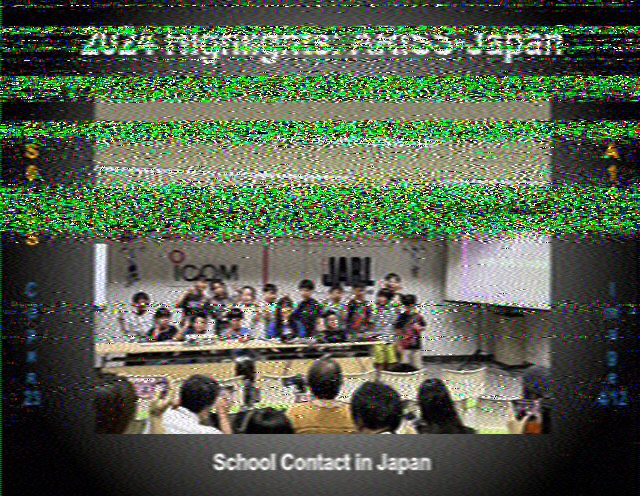
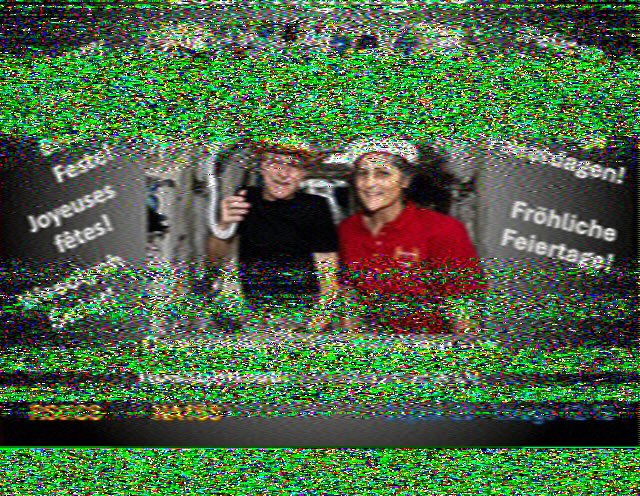
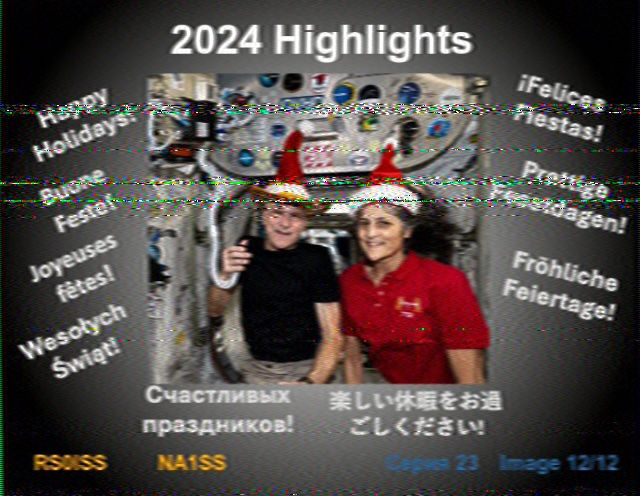
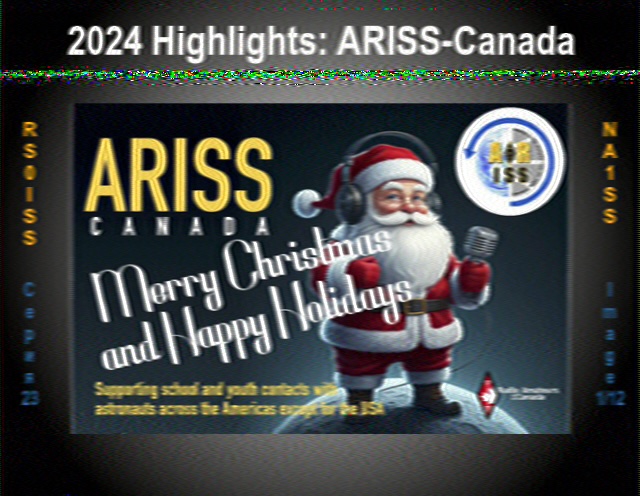
Ticking another thing off my bucket list this year has been the reception of SSTV images from the International Space Station (ISS) as part of the ARISS Expedition 72 – Series 23 Holidays 2024 mission.

Receiving the images is almost trivial – provided you have an antenna and a radio receiver capable of receiving 145.800Mhz FM, you can use your favourite Slow Scan Television software to receive the images.

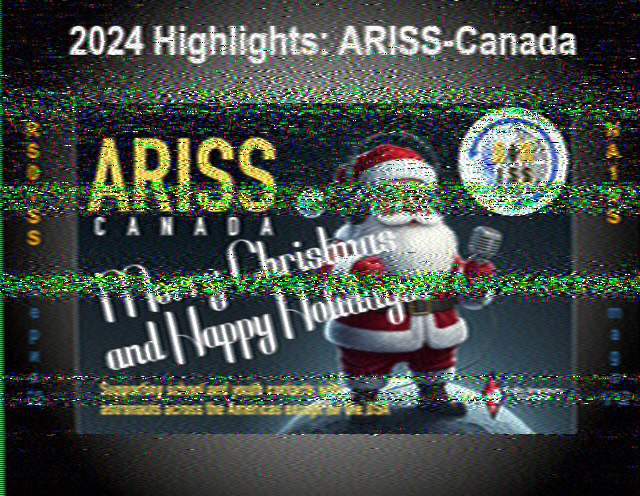
2024 ARISS-Canada SSTV Image received in PD120 Format.

By far the best image of the day was received on the 2024-12-29 0822UTC pass of the space station, which had a maximum elevation of around 50 degrees, with the image captured during the latter half of pass as the ISS was declining in elevation out to the East.

Earlier images were taken as the ISS was rising in the West, and I can only assume that the deep signal fades (the noisy green bars) were the result of atmospheric conditions and the receiving pattern of my VHF antenna – not so much the antenna itself but the immediate environment around it that would be impacting the signal received.
Overall I am pretty happy to be able to say I have received images from the ISS. Maybe I should aspire to make an FM contact with RS0ISS/NA1SS some time and see if I get a response back 🙂

Icing on the cake was being able to submit these images to the ARISS gallery website, and get a nice certificate for it!

A V/U Handheld Moxon Antenna for Satellites

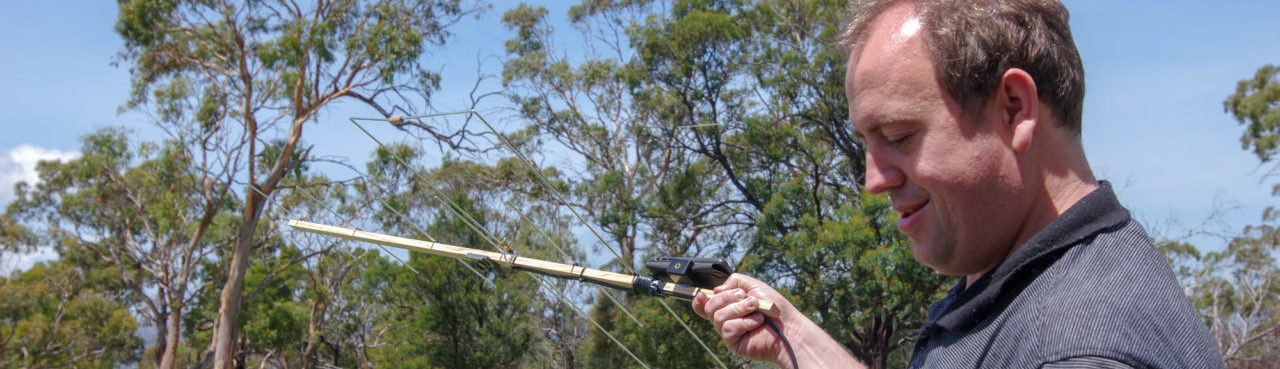
The Completed MoxonAs per my last post, I have been getting pretty excited about working satellites. However relying on the little ‘rubber duck’ antenna that came with the IC-T90A hand held does limit the range in a way that I could only really work the satellites at high elevation angles. With costs of commercial V/U antennas for satellite work usually over $200 AUD, it was time to build my own.

I did have some constraints around the antenna design:

  • It had to cost under $50 to make.
  • No speciality materials required – I could either readily purchase from a shop, or I already had materials on hand.
  • It had to be made using tools I had on hand.

The last point ruled out making a crossed yagi antenna to my standards as it would require a drill press to successfully fabricate (I am bad at drilling square!)

In the end a quick google found me looking at making a Moxon designed by LY3LP and modified by M1GEO, but I really wanted to get some close ups of some of the more important parts of the build. What follows is an abbreviated build guide with photos. In all, it took less than 2 hours to construct.

Update 22/12/2018 2.15pm – Yep, this antenna is a winner – here is the audio from the AO-91 pass @ 2018-12-22 1342 AEDT. Big improvement – action starts at around 2mins in.

Read more